Landing on the Moon

Why the Sun and the Earth in the lunar sky decide where we land.

The short version

Landing on the Moon is only the first problem. A lander then has to stay powered, stay warm and stay in touch, and all three depend on one thing: where the Sun and the Earth sit above the horizon at that spot, on that day.

crewed landings, all by Apollo between 1969 and 1972
6
people have walked on the Moon
12
of lunar rock and soil brought back by Apollo
382 kg
one-way radio delay between the Moon and Earth
1.3 s

Three things decide a landing

Mission planners weigh many things. These three are the ones MOONbound helps you compare.

01

Sunlight

Power and heat

A lunar day lasts about 29.5 Earth days: roughly two weeks of sunlight, then two of night. Surfaces swing from about 127 °C in sunlight to −173 °C in the dark, so a lander must finish its work in daylight or survive the cold.

The Moon’s axis is tilted only about 1.5°, so near the poles the Sun skims the horizon. Some ridges there stay lit for most of the year, while the floors of deep craters never see the Sun.

  • Solar power
  • Temperature
  • Shadows
02

Earth in the sky

Radio contact

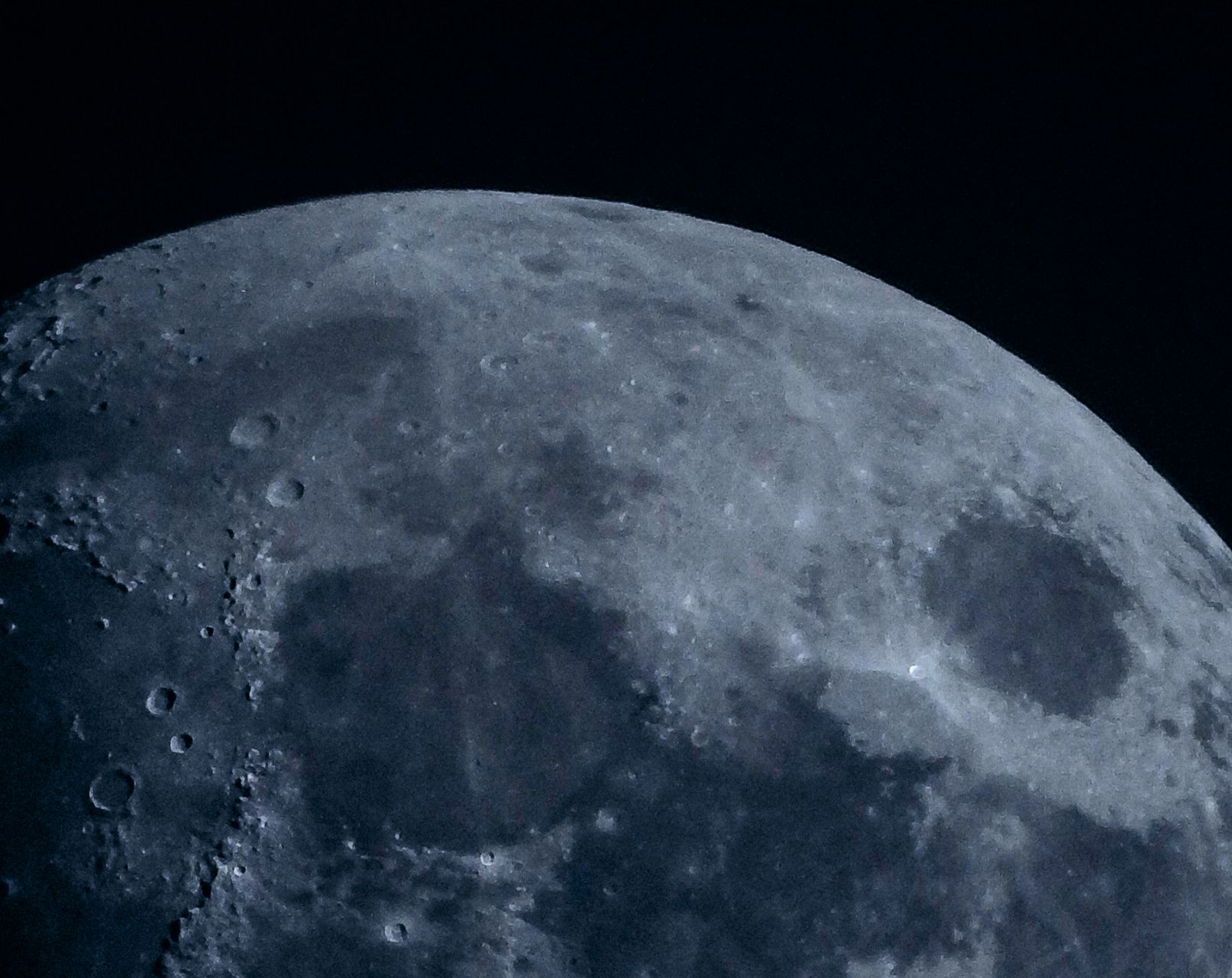
The Moon always shows Earth the same face, so from the near side Earth hangs in almost the same spot in the sky and a lander has a direct radio line home, about 1.3 seconds away.

It is not perfectly still: the Moon’s slow wobble, called libration, shifts Earth by several degrees. Near the poles Earth sits low and hills can hide it, and on the far side it never rises, so a relay satellite is needed.

  • Direct-to-Earth
  • Libration
  • Relay satellites
03

The ground

Slopes, rocks and craters

Gentle slopes and few boulders decide where a lander can stand. Orbiters such as NASA’s LRO map the ground to within metres, and the Apollo sites were picked from such images and from earlier robotic scouts.

The terrain also draws the skyline. A ridge a few kilometres away can shade the Sun or block Earth, which is why MOONbound scans the horizon around every site.

  • Slope
  • Boulders
  • Skyline

Two horizons, two different worlds

The same Sun behaves very differently depending on where you stand. Watch one lunar day, sped up, at two places.

At the equator

The Sun climbs high, crosses the sky and sets, then stays gone for about two weeks. Earth, on the near side, hardly moves.

Time is sped up: each loop is one lunar day.

Near the south pole

The Sun never climbs much more than a degree or so above the horizon. It circles slowly, hills hide it for a while, and every shadow is very long.

Same time scale. This is why the exact site and date matter so much.

Landings so far

From the first robot to the first footprints, and on to a crowded south pole.

  1. Luna 9

    The Soviet Union’s probe made the first soft landing on the Moon and sent back the first pictures from the surface.

  2. Surveyor

    Five NASA landers scouted the ground and tested how firm it was, so Apollo knew a spacecraft would not sink.

  3. Apollo 11

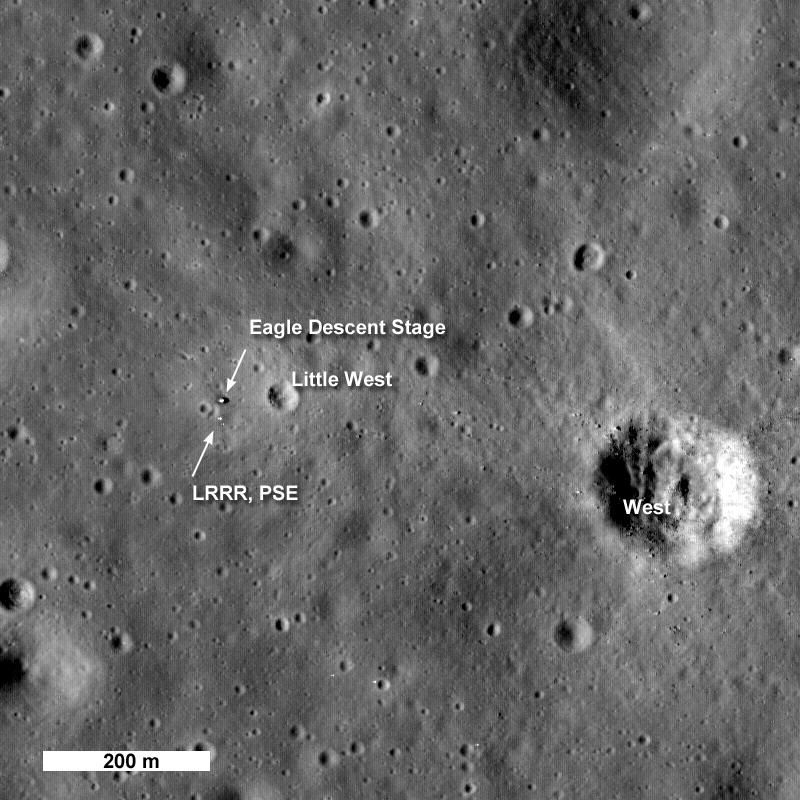
    Neil Armstrong and Buzz Aldrin landed in the Sea of Tranquility, the first people on the Moon. LRO has since photographed the site from orbit, and the lander’s descent stage is easy to spot.

    Orbital view of the Apollo 11 landing site with the Eagle descent stage and nearby craters labelled
    NASA / LRO · Apollo 11 site
  4. Apollo 12

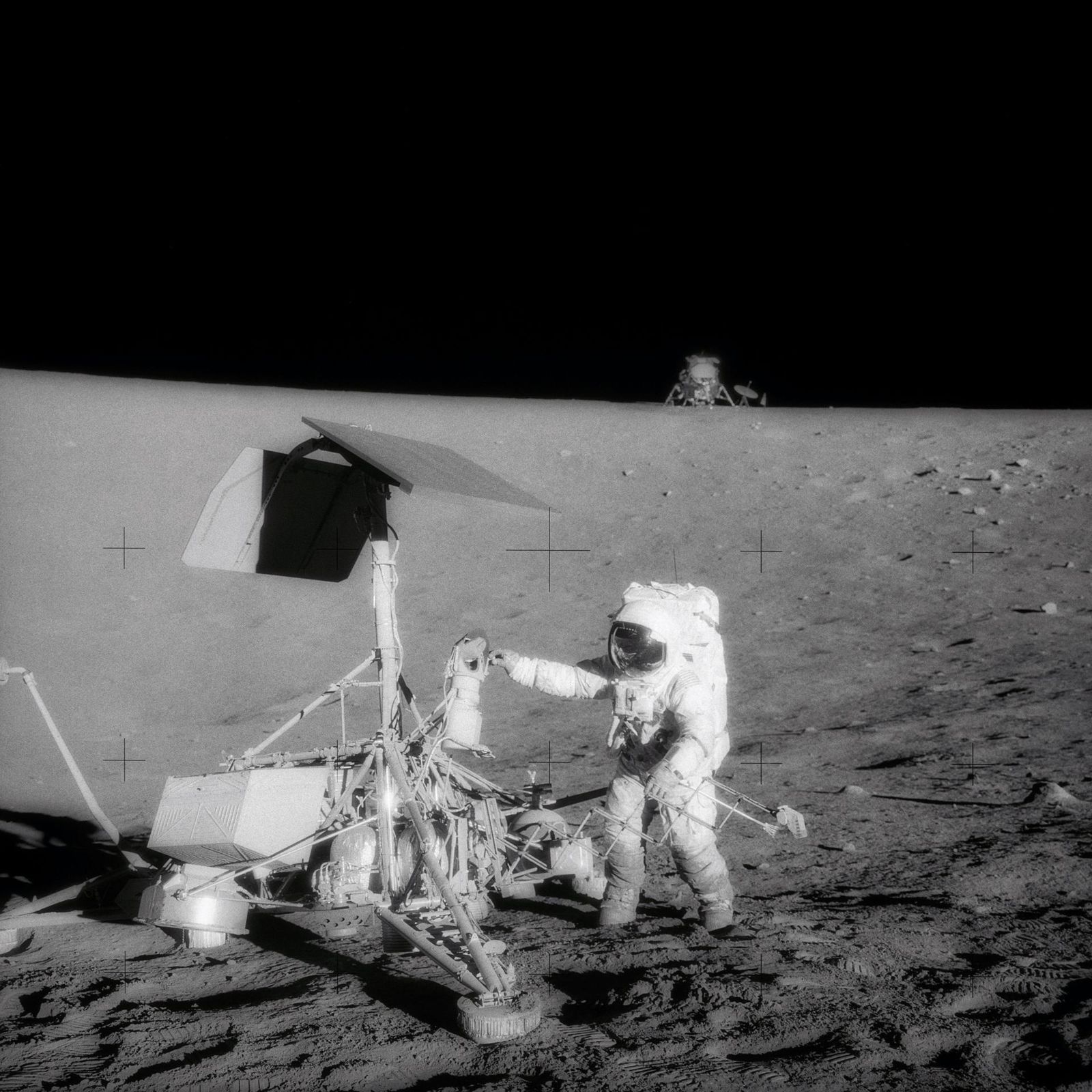
    The crew landed within walking distance of Surveyor 3, about 180 metres away, proving a pinpoint landing was possible. They brought back parts of the old probe.

    Apollo 12 astronaut beside the Surveyor 3 lander, with the Apollo lander on the horizon
    NASA · Apollo 12
  5. Apollo 17

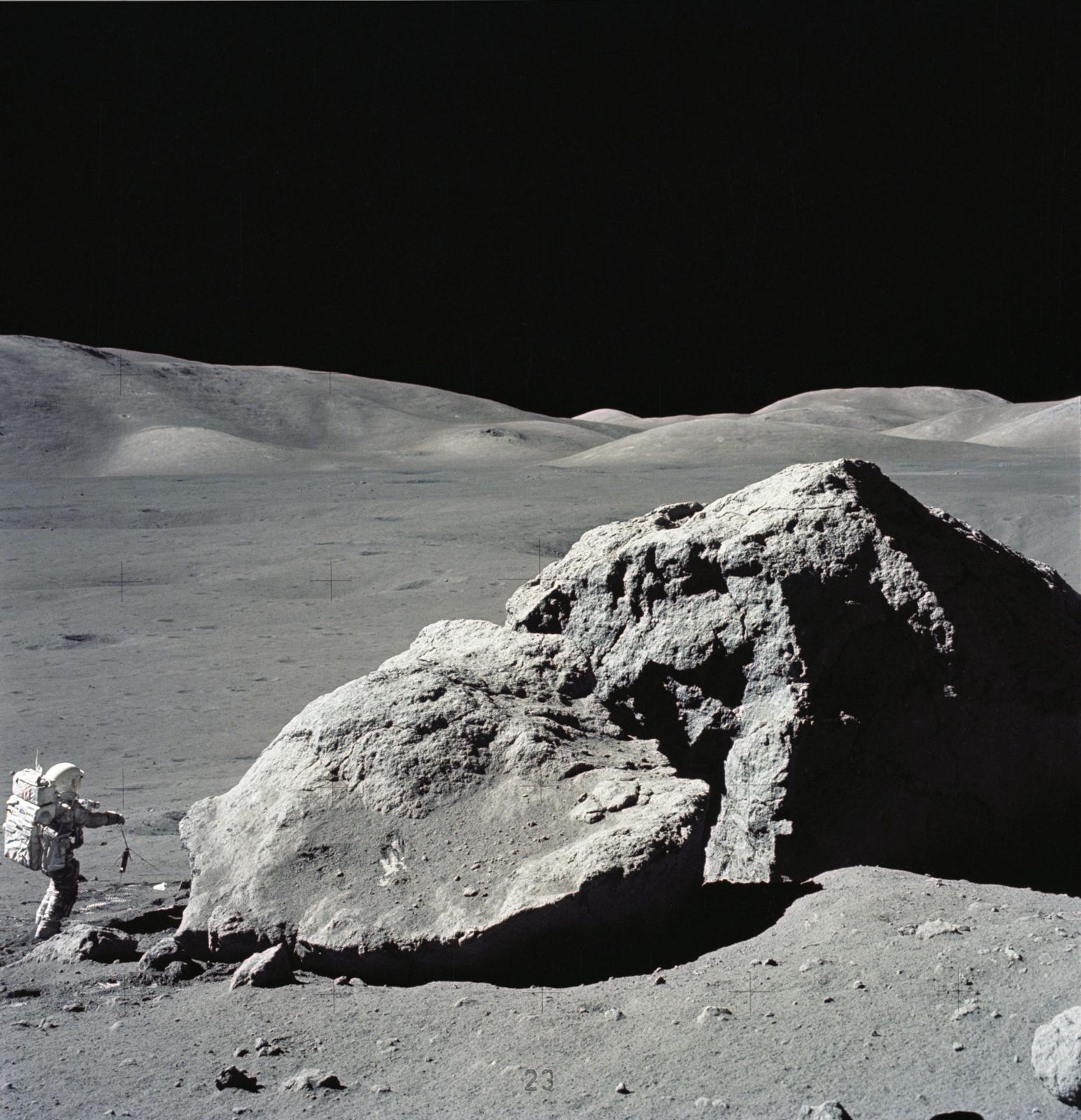
    The last crewed landing, in the Taurus-Littrow valley. Harrison Schmitt, the only professional geologist to walk on the Moon, studied this split boulder. In all, twelve people walked on the Moon and brought back about 382 kg of rock and soil.

    Astronaut Harrison Schmitt standing beside a large split boulder in the Taurus-Littrow valley
    NASA · Apollo 17
  6. China’s Chang’e missions

    Chang’e 3 made the first soft landing in almost four decades. In January 2019 Chang’e 4 became the first to land on the far side, talking to Earth through a relay satellite.

  7. A new wave of landers

    India’s Chandrayaan-3 landed near the south pole in August 2023, and Japan’s SLIM made a precision landing in January 2024. Commercial landers followed: Intuitive Machines’ Odysseus in February 2024 and Firefly’s Blue Ghost in March 2025. Next come the Artemis landings, aimed at the south pole.

Where would you land?

MOONbound compares sites and dates by the sunlight and Earth views they get. See the NASA data behind it.

How we use NASA data